
In this guide
Lower earners pay less through marginal relief (26 per cent above a £21,250 exemption). Employees pay 6 per cent social security up to £6,062 a month and a long-term care contribution of up to 1.5 per cent. On £150,000 the take-home is about £113,400 a year; on £300,000 about £231,100. You become tax resident from the day you arrive to live.
At a glance
- 20%Top rate of income tax, with no higher bands
- NoneCapital gains tax
- NoneInheritance tax
- 5%GST on most goods and services, food included
Tax is usually the first reason people look at Jersey and the last thing they properly understand. Here is how it actually works for an individual, with the 2026 figures from Revenue Jersey. Treat it as orientation, not tax advice, and get proper advice before you move anything.
Work out your take-home pay
An estimate for one employee in 2026, using the rules on this page
Take-home pay a year at six salaries, worked out with the 2026 rules on this page: the lower of 20% of income or 26% of income above £21,250, 6% social security on earnings up to £72,744, and long-term care of up to 1.5%.
Jersey take-home
£113,385 a year
£9,449 a month
About £22,000 a year more than in England†
What you keep of £150,000
| A year | Jersey | England† |
|---|---|---|
| Income tax | £30,000 | about £53,700 |
| Social security (National Insurance in England) | £4,365 | about £5,000 |
| Long-term care | £2,250 | None |
| Total deductions | £36,615 | about £58,700 |
| Take-home | £113,385 | about £91,300 |
| Effective rate | 24.4% | about 39.1% |
At this salary the standard calculation applies: 20% of all income (£30,000) is less than 26% of income above £21,250 (£33,475).
An estimate, not tax advice. One employee in 2026 with no allowances, no pension contributions and no other income. England: income tax and National Insurance at 2025/26 rates, still being checked†.
Take-home at six salaries
| Salary | Jersey take-home | England take-home |
|---|---|---|
| £30,000 | £25,754 | about £25,100 † |
| £50,000 | £38,964 | about £39,500 † |
| £60,000 | £45,569 | about £45,400 † |
| £100,000 | £74,135 | about £68,600 † |
| £150,000 | £113,385 | about £91,300 † |
| £300,000 | £231,135 | about £170,800 † |
Income tax: the 20 per cent rate
Jersey has a single standard rate of income tax of 20 per cent. There are no higher bands. Whether you earn £60,000 or £6 million, the most you pay on personal income is 20 per cent.
For lower and middle incomes there is a second calculation called marginal relief. You pay whichever of the two gives the lower bill:
- Standard calculation: 20 per cent of your total income, with very few deductions.
- Marginal calculation: 26 per cent of your income above the exemption threshold, after allowances.
For 2026 the exemption threshold is £21,250 for everyone. Since 2026 is the first year of mandatory independent taxation, the old married threshold and second earner's allowance have gone. Each adult is taxed on their own income with their own threshold.
The threshold goes up if you have children (£3,950 per child, plus an additional allowance of £5,900 for a lone parent or where one parent is the sole earner, roughly speaking) and for registered childcare costs (£8,050, or £20,950 for a pre-school child).
The crossover where both calculations give the same answer is about £92,000 for a single person with no allowances. Above that you simply pay 20 per cent, and the child and childcare allowances stop making any difference to your bill. That surprises a lot of higher earners who are used to UK-style reliefs.
Calculated from Revenue Jersey's 2026 rules: the lower of 20% of income or 26% of income above £21,250. Excludes social security and long-term care.
Show as a table
| Income | Income tax | Effective rate |
|---|---|---|
| £20,000 | £0 | 0.0% |
| £30,000 | £2,275 | 7.6% |
| £40,000 | £4,875 | 12.2% |
| £50,000 | £7,475 | 14.9% |
| £60,000 | £10,075 | 16.8% |
| £80,000 | £15,275 | 19.1% |
| £92,000 | £18,395 | 20.0% |
| £100,000 | £20,000 | 20.0% |
| £150,000 | £30,000 | 20.0% |
Social security

Social security is Jersey's equivalent of National Insurance and it is capped, which matters a lot at higher incomes.
- Employees pay 6 per cent of earnings up to the Standard Earnings Limit, which is £6,062 a month (£72,744 a year) in 2026. Above that you pay nothing more. Maximum employee contribution is about £4,365 a year.
- Employers pay 6.5 per cent up to the same limit, then 2.5 per cent on earnings between the Standard Earnings Limit and the Upper Earnings Limit of £27,632 a month (£331,584 a year).
- Self-employed (Class 2) pay 12.5 per cent up to the standard limit and 2.5 per cent up to the upper limit†.
Your contributions build entitlement to the Jersey old age pension and, after six months, the health card that subsidises GP visits.
Long-term care contribution
This is a separate levy collected with income tax that funds care in old age. It is charged at up to 1.5 per cent of income, using the same allowances as income tax (there is a marginal rate of 1.95 per cent for lower earners, so most people pay less than the headline). It is capped at the social security Upper Earnings Limit of £331,584, so the most anyone pays is about £4,975 a year in 2026. The Government has discussed raising the rate from 2027†.
What Jersey does not have
- No capital gains tax. Sell shares, a business or a property at a profit and there is no Jersey tax on the gain.
- No inheritance tax. There is a small probate stamp duty on Jersey estates, capped at £100,000, but no tax on inheritance as such.
- No wealth tax and no annual property tax beyond modest parish rates.
- No VAT. Instead there is GST.
If you keep UK assets, UK rules may still bite. UK inheritance tax moved to a residence-based test in April 2025 and can follow you for years after leaving†. UK property remains within UK capital gains tax for non-residents. This is exactly where you need an adviser who knows both systems.
GST
Goods and Services Tax is charged at 5 per cent on most goods and services supplied in Jersey, including food, which the UK zero-rates. It also applies to goods you import, including online shopping and a car, with relief for household belongings you have owned for over six months when you move. Prices in shops include it.
Property taxes
- Stamp duty on freehold purchases is banded: roughly 1.5 per cent up to £300,000, 2 per cent to £500,000, 3 per cent to £700,000, 3.5 per cent to £1 million, 4.5 per cent to £1.5 million, rising to 10 to 11 per cent above £3 million. An £800,000 home costs about £17,590 including the £90 registration fee. Share transfer flats pay an equivalent Land Transaction Tax.
- First-time buyer relief applies up to £700,000 if you hold Entitled status and have never owned property anywhere.
- Higher rate of 2 percentage points above standard for a property that is not your main home (reduced from 3 for 2026).
- Parish rates are set by each parish and are low by UK standards, often a few hundred pounds a year for a typical home†.
Becoming tax resident
Jersey's tax year is the calendar year. If you move here intending to stay for five years or more, you are treated as resident and ordinarily resident from the day you arrive. From that date you are taxed on worldwide income, with credit for foreign tax paid. Jersey-source income is taxed for the whole year of arrival. Your allowances are apportioned by days for that first year.
There is no simple 183-day test for new arrivals. Having accommodation available to you in Jersey and spending even one night in it can make you resident for the year, so take care with timing if you are leaving the UK partway through a year. The UK statutory residence test runs alongside and you may be dual resident for a period, with the UK-Jersey double tax agreement deciding where you pay.
Once registered, Revenue Jersey gives you an ITIS rate, an effective percentage your employer deducts from each payslip. New arrivals get an estimated rate, then a return each year trues it up. Tax returns are filed online, usually by the end of July for the previous year†.
Worked examples
Both assume a single employee in 2026 with no pension contributions and no other income. Figures are rounded.
£150,000 salary
| Item | Calculation | Amount |
|---|---|---|
| Income tax | Standard: 20% × £150,000 = £30,000. Marginal: 26% × (£150,000 − £21,250) = £33,475. Lower wins. | £30,000 |
| Social security | 6% × £72,744 (capped) | £4,365 |
| Long-term care | 1.5% × £150,000 | £2,250 |
| Total deductions | £36,615 | |
| Take-home | £113,385 | |
| Effective rate | 24.4% |
For comparison, the same salary in England would attract income tax and National Insurance of about £58,700 under 2025/26 rates†, leaving about £91,300. The Jersey saving is roughly £22,000 a year.
£300,000 salary
| Item | Calculation | Amount |
|---|---|---|
| Income tax | 20% × £300,000 | £60,000 |
| Social security | 6% × £72,744 (capped) | £4,365 |
| Long-term care | 1.5% × £300,000 (below the £4,975 cap) | £4,500 |
| Total deductions | £68,865 | |
| Take-home | £231,135 | |
| Effective rate | 23.0% |
In England the same salary would attract about £129,200 of income tax and National Insurance at 2025/26 rates†, leaving about £170,800. The gap widens to roughly £60,000 a year.
The effective rate falls as income rises because social security and long-term care are capped. That is the whole point of Jersey for high earners, and it is also why there is so little scope for "clever" structuring. The rate is already flat.
A couple with two children on £150,000 and £60,000
Under independent taxation each is assessed alone. The £150,000 earner pays the figures above, and child allowances do nothing for them. The £60,000 earner would be on the marginal calculation: 26 per cent of (£60,000 − £21,250 − allowances). If they claim both children's allowances (£7,900) that is 26 per cent of £30,850, about £8,020, against a standard calculation of £12,000. So allowances should be claimed by the lower earner. Social security for the £60,000 earner is £3,600, and long-term care around £900.
The high value route
If you come in under the high value residency route (formerly 2(1)(e)), you pay 20 per cent on the first £1.25 million of worldwide income and 1 per cent above that, with a minimum annual contribution of £250,000. Jersey property income stays at 20 per cent. See the housing qualifications page for the full conditions. Guernsey offers income tax caps instead, which can be markedly cheaper for worldwide incomes between about £500,000 and £2 million; our Jersey vs Guernsey comparison sets out both.
Get advice
This matters more than anything else on this page. The headline rates are simple, but the year of arrival, UK exit, pensions, trusts, company ownership, UK property and inheritance planning are not. Speak to a Jersey tax adviser and, if you are leaving the UK, to someone who understands the UK side. A few hundred pounds of advice before you move can save you a great deal more than it costs.
Frequently asked questions
Is income tax in Jersey really only 20 per cent?
Yes. Twenty per cent is the maximum rate on personal income with no higher bands. Lower earners pay less under marginal relief, calculated at 26 per cent of income above a £21,250 exemption threshold, and you pay whichever of the two calculations is lower.
Does Jersey have capital gains tax or inheritance tax?
No. Jersey has neither, and no wealth tax. There is stamp duty on property purchases of 1.5 to 11 per cent, a small probate duty on estates and 5 per cent GST on most goods and services.
How much is social security in Jersey?
Employees pay 6 per cent of earnings up to £6,062 a month in 2026 (a maximum of about £4,365 a year). Employers pay 6.5 per cent up to the same limit and 2.5 per cent above it to an upper limit. A separate long-term care contribution of up to 1.5 per cent is collected with income tax.
† Figure still being checked against its source before launch.
More guides

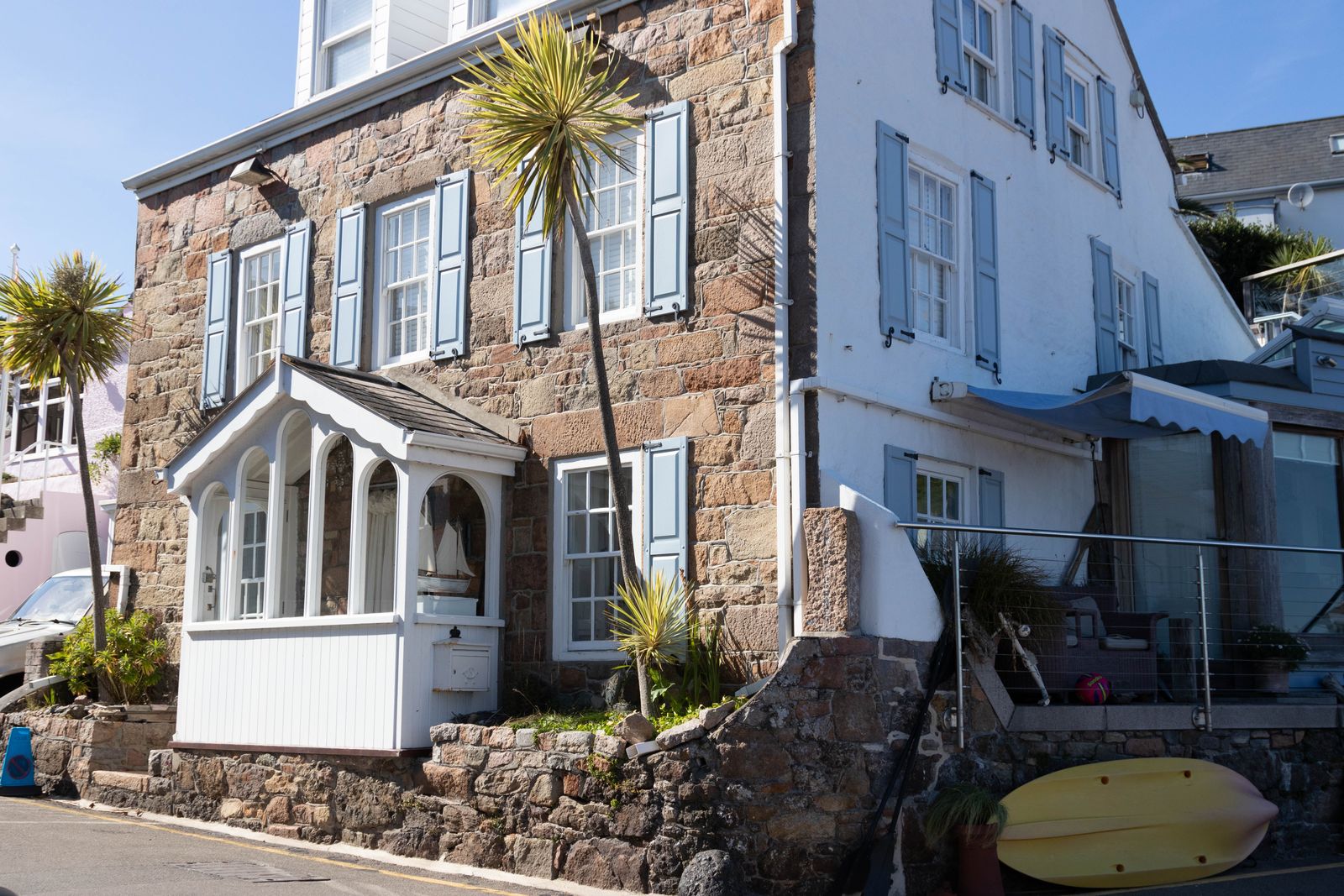


Photography in More guides
- La Corbière lighthouse at low tide, St Brelade. Photograph: Daniel Kraft, CC BY-SA 3.0, via Wikimedia Commons
- A granite house at Rozel, St Martin. Photograph: Danrok, CC BY-SA 4.0, via Wikimedia Commons
- Inside the Central Market, St Helier. Photograph: Pymouss, CC BY-SA 4.0, via Wikimedia Commons
- St Peter Port harbour, Guernsey. Photograph: Manxruler, CC BY-SA 4.0, via Wikimedia Commons
Sources
- https://www.gov.je/TaxesMoney/IncomeTax/Individuals/AllowancesReliefs/Pages/2026TaxAllowances.aspx
- https://www.gov.je/TaxesMoney/IncomeTax/Technical/Guidelines/Pages/2026BudgetSummary.aspx
- https://gov.je/TaxesMoney/IncomeTax/Individuals/PayingTaxEarnings/Pages/CalculatingTaxAssessment.aspx
- https://gov.je/TaxesMoney/IncomeTax/Individuals/IncomeTaxCircumstances/Pages/ResidencyForJerseyTax.aspx
- https://www.gov.je/Working/Contributions/Employers/Pages/Tables.aspx
- https://taxsummaries.pwc.com/jersey/individual/other-taxes
- https://gov.je/Benefits/LongTermCareScheme/Pages/Funding.aspx
- https://www.gov.je/TaxesMoney/GST/GSTCustomers/Pages/index.aspx
- https://www.gov.je/TaxesMoney/PropertyTransactionTaxes/LandTransaction/pages/landtransactiontaxrates.aspx
- https://www.mourant.com/guides/stamp-duty-ltt-and-ept-in-jersey/
- https://www.gov.je/TaxesMoney/IncomeTax/Technical/Guidelines/Pages/TaxInformationHighValueResidents.aspx
- https://gov.je/LifeEvents/MovingToJersey/WhenYouArrive/Pages/RegisterJerseyResident.aspx
- https://www.gov.uk/income-tax-rates
- https://www.gov.uk/national-insurance-rates-letters