In this guide
- Why people move here
- Step one: can you move, and on what terms?
- Step two: understand the tax
- Step three: find somewhere to live
- Step four: the cost of living, honestly
- Step five: schools and childcare
- Step six: healthcare
- Step seven: getting here
- Step eight: cars, pets and the practical stuff
- Step nine: work
- Step ten: the first six months
- Jersey or Guernsey?
- Frequently asked questions
Most newcomers arrive with Licensed status through an employer or as Standard status (limited to Registered rental property), and get full rights after ten years. Income tax is capped at 20 per cent, there is no capital gains or inheritance tax, GPs charge about £34 a visit, and a one-bed flat in St Helier rents for roughly £1,350 to £1,750 a month.
This is the whole move on one page, pieced together from gov.je, Statistics Jersey, the schools, the hospital and the services themselves. Each section links to a detail page if you want more.
Why people move here
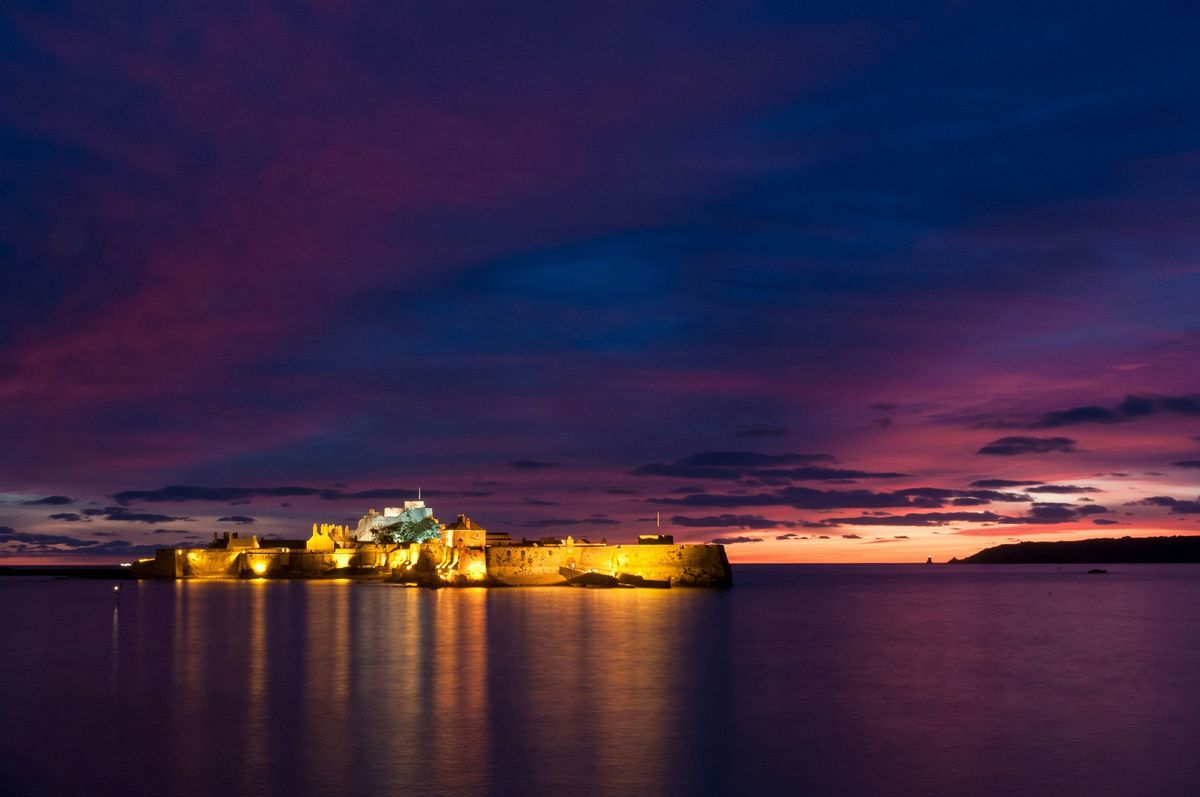
The pitch is simple. Twenty per cent income tax with no higher bands, no capital gains tax, no inheritance tax, a 45-square-mile island with beaches on every side, an hour from London, a serious finance and legal sector, and a safe, outdoorsy place to raise children. Around 104,500 people live here.
The downsides are real too. Housing is London-expensive and rationed by law. GPs charge. Everything arrives by boat. Fog closes the airport. It is small, and after a year you will recognise most faces at the Co-op. If you can live with that, it is a very good place to live.
Step one: can you move, and on what terms?
British and Irish citizens need no immigration permission. Everyone else needs a work permit from Jersey Customs and Immigration, which the employer applies for.
What actually controls your life here is the Control of Housing and Work (Jersey) Law. It gives everyone a residential status on a registration card, and that status decides which homes you can live in and which jobs you can do.
- Licensed: your employer holds a licence for your role. You can rent or buy one home, live in it, and work in that role. Most professionals arrive this way.
- Standard (called Registered until September 2026): the default without a sponsor. You can rent one Registered property and work in roles open to Standard staff. You cannot buy.
- Entitled for Work Only: after five years, any job, but housing stays restricted.
- Entitled: after ten years' continuous residence, rent, buy and work anywhere.
- High value residency (formerly 2(1)(e)): the wealth route. Entitled status from day one, decided by the Housing and Work Control Panel since September 2026. Historically that meant a minimum £250,000 a year tax contribution, £10 million net worth and a home over £3.5 million†.
Ringed: your likely status, from your answers above.
Source: gov.je, residential status; Control of Housing and Work (Jersey) Law 2012 as amended.
Show as a table
| Route | On arrival | After 5 years | After 10 years |
|---|---|---|---|
| Without a sponsor | Standard | Entitled for Work Only | Entitled |
| With an employer licence | Licensed | Licensed | Entitled |
Get your employer to confirm in writing which status their licence gives you. Everything downstream depends on it. Full detail on the housing qualifications page.
Step two: understand the tax
For 2026:
- Income tax: 20 per cent standard rate. Lower earners pay less under marginal relief (26 per cent above a £21,250 threshold, plus child and childcare allowances). The two calculations cross at roughly £92,000; above that, 20 per cent flat.
- Social security: 6 per cent for employees, capped at earnings of £72,744, so about £4,365 a year maximum.
- Long-term care: up to 1.5 per cent, capped at £331,584 of income.
- GST: 5 per cent on most goods and services, including food.
- No capital gains tax, inheritance tax or wealth tax.
On £150,000 you take home about £113,000. On £300,000 about £231,000. You are tax resident from the day you arrive if you intend to stay five years or more, on worldwide income. The UK side of leaving is where the complexity lives. See the tax page for worked examples.
Step three: find somewhere to live
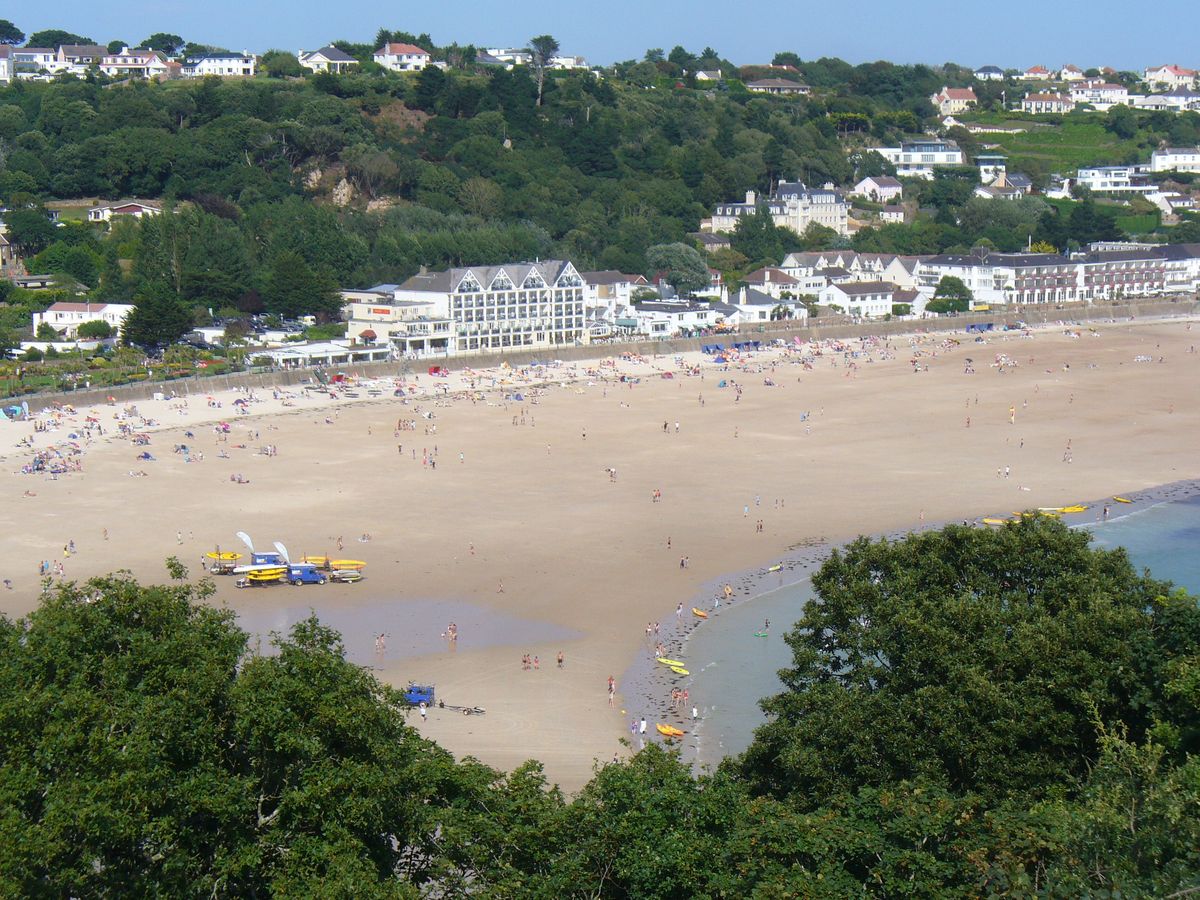
Twelve parishes, genuinely different. St Helier is the only town and has most flats and Registered rental stock. St Saviour and St Clement are the practical family suburbs. St Brelade is the beach-and-restaurants parish and priciest for sea views. St Peter has the airport and good value family homes. St Lawrence is central and rural. Trinity, St John, St Mary and St Ouen are country parishes with farmhouses, cliffs and surf. St Martin and Grouville are the pretty east with harbours and the Royal Jersey golf course.
Mean prices in Q2 2026: one-bed flat £326,000, two-bed flat £580,000, three-bed house £797,000, four-bed house £1.12 million. Rents are roughly £1,350 to £1,750 for a one-bed, £1,600 to £2,500 for a two-bed, £2,500 to £3,500 for a three-bed house†. Stamp duty on an £800,000 house is about £17,600. Conveyancing is by a Jersey advocate and freehold sales pass through the Royal Court on a Friday.
Read the where to live guide and the cost of living page.
Step four: the cost of living, honestly
Housing is London-level. Beyond that, expect London-ish prices for eating out and groceries, UK-average for most services, and some genuine savings: no council tax, cheaper fuel, no road tax, cheaper school fees and, after six months, subsidised GP visits.
A couple in a two-bed flat can live comfortably on about £4,200 a month all in. A family of four in a three-bed house with a child in nursery is nearer £7,200. Tables and budgets on the cost of living page.
Step five: schools and childcare
Jersey runs its own system, close to England's. There are 24 free States primaries and four free mainstream secondaries, plus Hautlieu, a free selective school from Year 10 with the main sixth form. The two fee-paying States schools, Victoria College (boys) and Jersey College for Girls, charge about £2,900 a term. Private schools include Beaulieu, De La Salle, FCJ, St Michael's, St George's and Helvetia House.
States admissions are by catchment through gov.je; mid-year arrivals are placed within about ten school days. The colleges and private schools run their own admissions, so contact them early.
Every child gets 30 free nursery hours a week in term time in the year they turn four. From January 2026 families of two to three year olds can claim about £6,270 a year towards registered childcare. Before that, budget £80 to £110 a day†. See the schools page.
Step six: healthcare
Jersey is not in the NHS. GP surgeries charge per visit, averaging just under £34 with the Government subsidy. For your first six months you have no health card and pay the full fee, around £85 to £100. After six months of contributions you get the card, which brings the subsidy and free prescriptions. Children under 18 see the GP free.
A&E at the General Hospital is free from day one. Everything after A&E is chargeable until you have six months' residence and contributions (twelve if not working), unless you are Licensed, in which case hospital care is free immediately. Consider private medical insurance for the gap.
Dentistry is entirely private, so register early and ask about a membership plan, which spreads routine care into a monthly fee. Typical prices, children's care, how to register and the practices we rate are on the dentists page.
Step seven: getting here

By air. Jersey Airport is 15 minutes from town. British Airways flies to Heathrow and Gatwick. easyJet flies to Gatwick, Luton, Southend, Manchester, Liverpool, Glasgow, Birmingham, Belfast and Edinburgh (some seasonal). Loganair, which stepped in when Blue Islands collapsed in November 2025, flies to Southampton, Exeter, Bristol, East Midlands, Norwich, Dublin and Paris. Aurigny flies to Guernsey.
By sea. DFDS took over Jersey's ferry contract in March 2025 and runs Poole (about 4.5 hours), Portsmouth (overnight) and St Malo. Cars, pets and removal vans come this way.
Step eight: cars, pets and the practical stuff
- Driving licence: swap your UK licence at your Parish Hall, £70, as soon as you arrive.
- Car: register immediately at DVS, La Collette. GST at 5 per cent unless owned over six months, plus Vehicle Emissions Duty. No grace period for UK plates. Speed limit 40 mph.
- Pets: dogs, cats and ferrets from the UK need no passport or vaccinations. Dog licence £10 a year from the Parish Hall.
- Registration: register as a resident online, pay £88.15 for your card, and get your social security number and tax registration in one go.
- Utilities: one supplier each. Jersey Electricity, Jersey Water, Island Energy for gas, JT or Sure for fibre.
The moving checklist has all of this with phone numbers, in time order.
Step nine: work
Finance employs about a quarter of the workforce and produces 40 per cent of output, with the big offshore law firms alongside. Digital employs over 3,000. The Government is the largest single employer, though most public jobs need five years' residence unless you are a key worker such as a doctor, nurse or teacher.
To start a business you need a business licence under the CHW Law and a staffing licence to employ anyone not Entitled. Locate Jersey (locatejersey@gov.je) is the Government's front door and will walk you through it.
Step ten: the first six months

Register as a resident, swap your licence, register the car, find a GP and dentist, get the children into school, get your ITIS tax rate to your employer. At six months, apply for your health card and confirm hospital eligibility. Keep every lease and payslip as evidence of continuous residence for the five and ten year marks.
And get out. Walk the north coast path. Swim at Plémont. Eat at a kiosk in St Ouen's Bay. The island rewards people who get involved, and it is small enough that you can.
Jersey or Guernsey?
Read the comparison. Short version: Jersey is bigger and better connected with more jobs and schools; Guernsey is quieter, has tax caps that suit some wealthy movers, and its Open Market lets you buy without any residency qualification.
Frequently asked questions
Do I need a visa to move to Jersey from the UK?
No. British and Irish citizens need no immigration permission. Your right to rent, buy and work is controlled instead by the Control of Housing and Work (Jersey) Law 2012, which gives you a residential status such as Licensed, Entitled or Standard.
How long does it take to get full residency rights in Jersey?
Ten years of continuous residence gives Entitled status, which lets you rent or buy any property and take any job. Entitled for Work Only comes at five years. Licensed status, through an employer, gives most housing rights from day one.
Is Jersey cheaper than London?
Housing costs are similar to London and groceries cost more than mainland UK. Income tax is capped at 20 per cent with no capital gains or inheritance tax, so take-home pay is higher. A couple on £150,000 keeps about £113,000 after tax and social security.
† Figure still being checked against its source before launch.
More guides
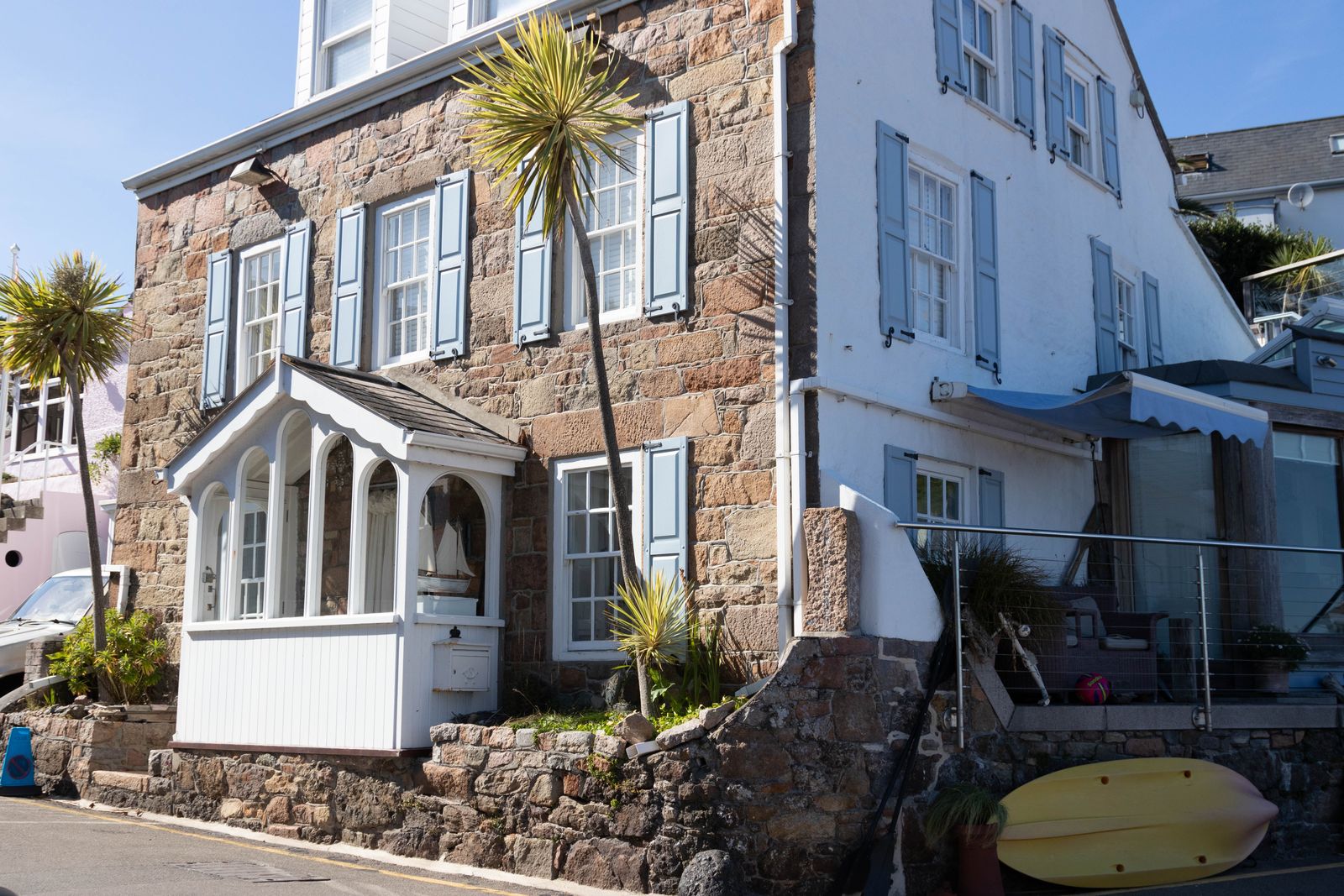
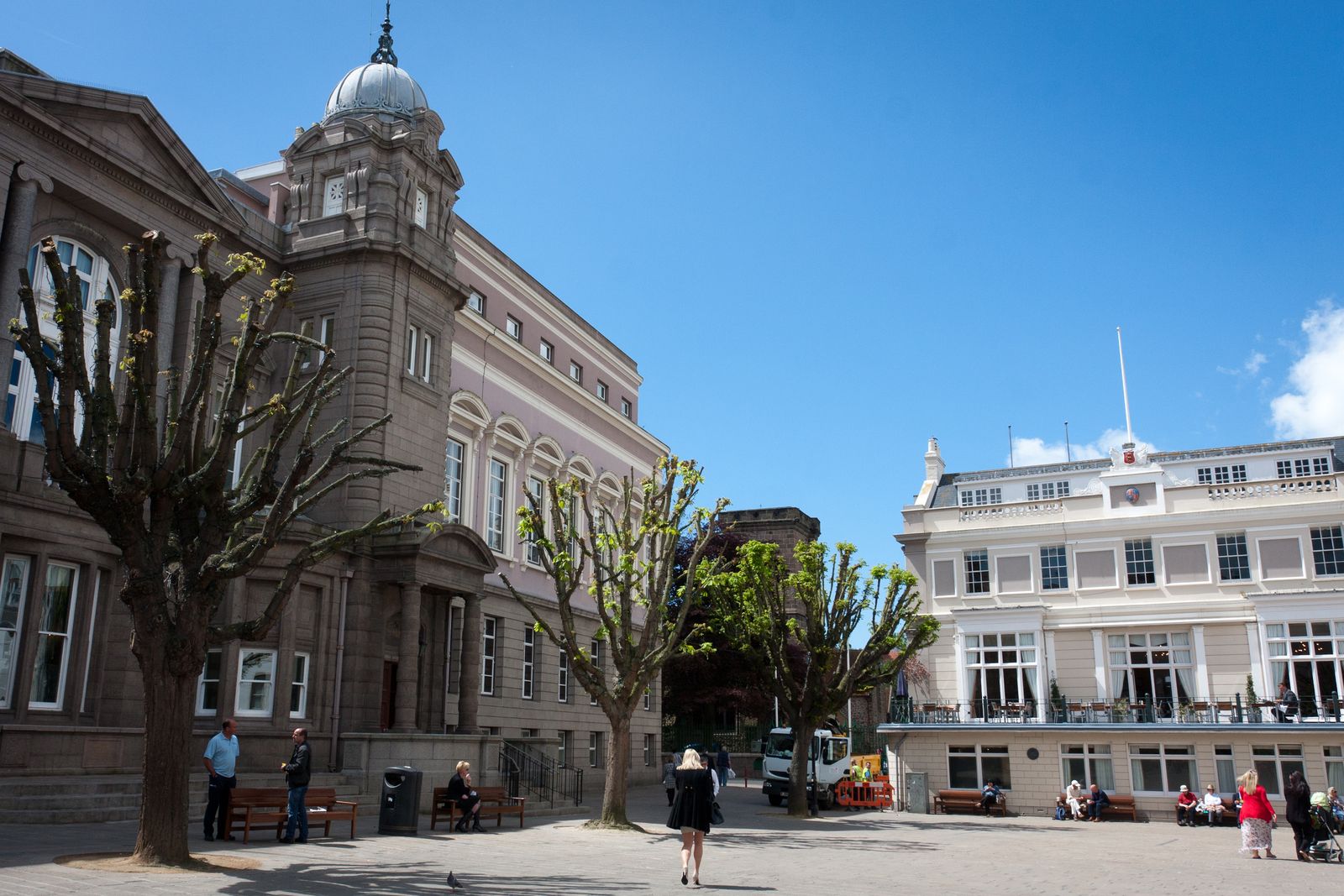
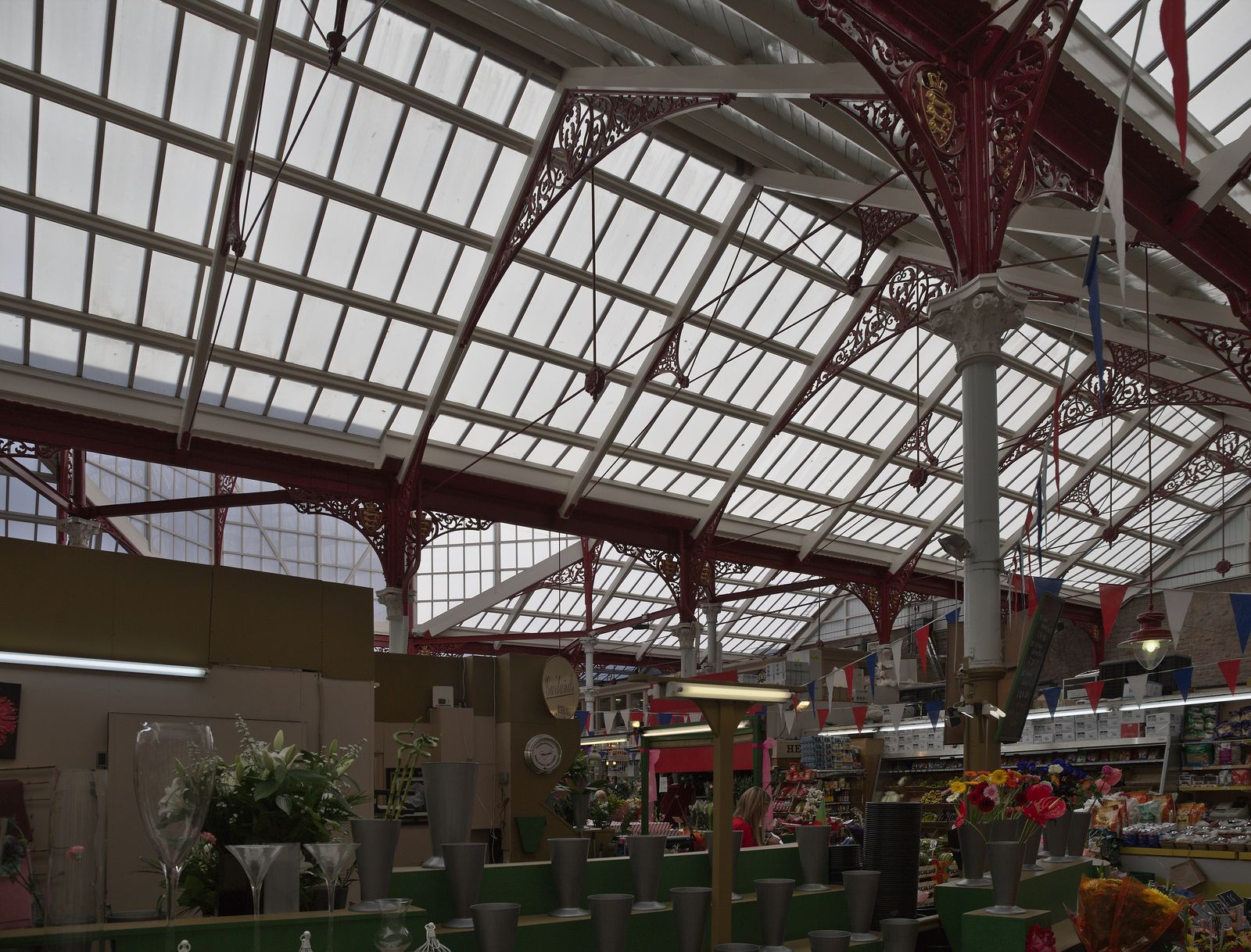
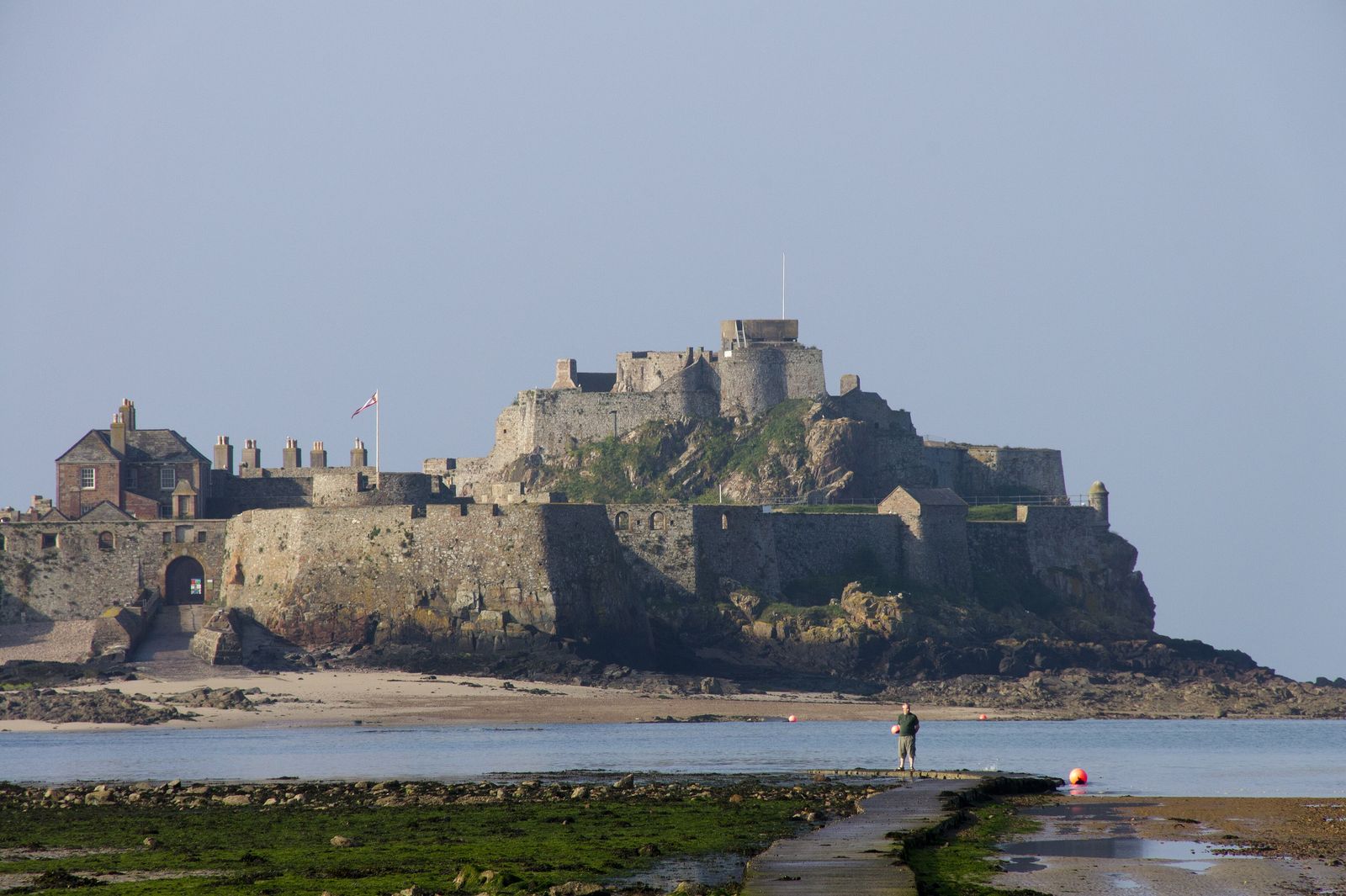
Photography in More guides
- A granite house at Rozel, St Martin. Photograph: Danrok, CC BY-SA 4.0, via Wikimedia Commons
- Royal Square, St Helier. Photograph: Danrok, CC BY-SA 3.0, via Wikimedia Commons
- Inside the Central Market, St Helier. Photograph: Pymouss, CC BY-SA 4.0, via Wikimedia Commons
- Elizabeth Castle and its causeway at low tide, St Helier. Photograph: Rachel D, CC BY 2.0, via Wikimedia Commons
Sources
- https://www.gov.je/Working/Contributions/RegistrationCards/Pages/ResidentialStatus.aspx
- https://www.walkersglobal.com/en/Insights/2026/09/Jerseys-Control-of-Housing-and-Work-law-what-employers-need-to-know
- https://www.gov.je/TaxesMoney/IncomeTax/Individuals/AllowancesReliefs/Pages/2026TaxAllowances.aspx
- https://www.gov.je/Working/Contributions/Employers/Pages/Tables.aspx
- https://gov.je/Benefits/LongTermCareScheme/Pages/Funding.aspx
- https://www.gov.je/TaxesMoney/IncomeTax/Technical/Guidelines/Pages/TaxInformationHighValueResidents.aspx
- https://gov.je/TaxesMoney/IncomeTax/Individuals/IncomeTaxCircumstances/Pages/ResidencyForJerseyTax.aspx
- https://stats.je/wp-content/uploads/2026/08/R-House-Price-Index-Q2-2026-9GI-SJ20260806.pdf
- https://jerseyeveningpost.com/news/2026/01/28/jerseys-population-now-estimated-to-top-105000-but-growth-slowing/
- https://www.gov.je/Education/Schools/FindingSchool/Pages/SecondarySchools.aspx
- https://gov.je/schooladmissions
- https://www.gov.je/Education/Preschool/Pages/NurseryEducation.aspx
- https://www.gov.je/News/2025/Pages/ChildcareFundingSchemeAnnouncement.aspx
- https://www.gov.je/health/doctordentist/doctors/pages/healthcard.aspx
- https://www.gov.je/Health/Travelling/Pages/MovingReturning.aspx
- https://www.bailiwickexpress.com/news/in-numbers-how-has-the-cost-of-a-gp-appointment-changed/
- https://www.jersey.com/plan-your-break/travel-providers/easyjet/
- https://www.ports.je/news/loganair-strengthens-jersey-connectivity-with-four-new-direct-routes-including-paris
- https://www.voyages-d-affaires.com/en/bankruptcy-jersey-blue-islands
- https://www.dfds.com/en-gb/passenger-ferries/ferry-crossings/ferries-to-jersey
- https://afloat.ie/port-news/ferry-news/item/66756-dfds-takes-over-ferry-routes-to-and-from-jersey
- https://gov.je/Travel/Motoring/DriverLicensing/Pages/applyingdrivinglicence.aspx
- https://www.gov.je/LifeEvents/MovingToJersey/WhenYouArrive/Pages/RegisterVehicle.aspx
- https://www.gov.je/Industry/PetsAndLivestock/PetMovements/Pages/TravelJerseyPetUKIoMCIs.aspx
- https://gov.je/LifeEvents/MovingToJersey/WhenYouArrive/Pages/RegisterJerseyResident.aspx
- https://gov.je/LifeEvents/MovingToJersey/WhyChooseJersey/Pages/BusinessandIndustries.aspx
- https://www.gov.je/Working/WorkPermits/Pages/WorkPermitPolicy.aspx